Showing posts with label History. Show all posts

November 04, 2008

America the beautiful


Dreams do come true.
Photo by Kuz'n Kirk

Today, November 4, 2008, we celebrate All-America Day -- a day that heralds a seismic shift, from the past to the future, in the country's landscape.

Today we celebrate hope, opportunity, and the vision of a more perfect union. We mark not the end of one man's journey to the presidency, but the beginning of a new journey for every man, woman and child who ever dreamed the American dream.

Tomorrow begins the next chapter in the fulfillment of America's promise. That is the challenge that we must meet and that we will meet. United, our best days are ahead.

Now more than ever, this is one country, America the beautiful.

September 17, 2007

Today is history's future

Happy Constitution Day!

"I have sworn . . . eternal hostility against every form of tyranny over the mind of man." (Thomas Jefferson)

Completed on September 17, 1787, and later ratified by special conventions in each of the original thirteen American states, the Constitution for the United States represents the supreme law of the United States of America and is the oldest comprehensive written national constitution still in force. - History of U.S. Constitution
That constitution is threatened today by a president who regards it on a par with Larry Craig's toilet paper - a useful symbol when it serves a personal need, but trash when it conflicts with his authoritarian agenda:
"Stop throwing the Constitution in my face,” Bush screamed back. “It’s just a goddamned piece of paper!" - The rant: Bush on the Constitution

December 17, 2006

Florida 'cowhunters' reenact cattle drives of a bygone era


Photo and report from Lakeland Ledger


More than 500 people recently completed a five-day trek through Osceola County to reenact Florida's great cattle drives of the 1800's.

Much of the drive traversed established dirt roads rather than wilderness, yet at times, amid the vast expanses of Overstreet Ranch or the palmetto flatwoods of Three Lakes Wildlife Management Area, it was possible to envision an earlier Florida devoid of highways, a place where cow hunters spent weeks driving their herds to market.

Riders camped each night in tents, their horses tied to lines strung between trees. As night fell Thursday at Overstreet Ranch, on the shore of Lake Kissimmee, dozens of campfires pierced the darkness and sent forth a smoky aroma.

The Seminole Tribe of Florida was well represented, fitting for a group that began ranching in the 1500s after horses and cattle arrived in Florida with Spanish explorer Juan Ponce de Leon. Skeeter Bowers and other Seminoles wore the lime-green bandanas of the cowhunter circle, and Billy Joe Johns drove a horse-drawn, covered wagon that also carried his wife, Tara, and their 8-year-old son, Jobe.

While the gathering stirred fond musings on Florida's past, it also spawned wistful thoughts about the future.

"There is a plague in Florida, and it's called dirt peddlers; you might call it real estate," said Carl Sharp, a self-proclaimed Cracker cowboy poet and the drive's oldest participant at age 92. "It's real, real sad."

Robert Burney, one of the cowhunters on the cattle drive, worried that the shadow of the Magic Kingdom's Tomorrowland might eclipse the proud past of Florida's cowboys.

"This is our heritage; that's what Florida was built on," Burney said.


Lakeland Ledger special report . . .

December 15, 2006

Happy Bill of Rights Day!

The United States Bill of Rights became law December 15, 1791:

The Bill of Rights includes rights such as freedom of speech, press, religion, and assembly. It also includes a clause assuring the American people that the bill of rights should not be interpreted as a comprehensive list of all rights belonging to Americans, but rather a list of the most important rights.

After the Constitution was ratified, the first Congress met in Federal Hall in New York City. Most of the delegates agreed that a Bill of Rights was needed and most of them believed that the same rights should be enumerated.

The task of drafting the Bill of Rights fell to James Madison, who based his work on George Mason's earlier work, Virginia Declaration of Rights. It had been decided earlier that the Bill of Rights would be added to the Constitution as amendments (the list of rights was not included in the text of the Constitution because it was feared that changing the document's text would necessitate the rather painful process of re-ratifying the Constitution).

On November 20, 1789, New Jersey became the first state in the newly-formed Union to ratify these amendments. Other states followed, and the ten amendments that were made law on December 15, 1791 soon became known as the Bill of Rights.


Its value, in Madison's view, was in part educational, in part as a vehicle that might be used to rally people against a future oppressive government, and finally -- in an argument borrowed from Thomas Jefferson -- Madison argued that a declaration of rights would help install the judiciary as "guardians" of individual rights against the other branches.


Exactly 217 years after becoming the first state to ratify the Bill of Rights, New Jersey took another small but important step toward guaranteeing full citizenship to all its citizens:
New Jersey became the third state to bless civil unions as an alternative to marriage for same-sex couples, choosing a middle ground that establishes a type of relationship that didn’t exist before Vermont created it in 2000.

The authors of the New Jersey measure said they intend for civil unions to be identical to marriage in all but name. The legislation spells out specific benefits to be extended, such as full adoption rights and the right to change surnames without a court petition. It also updates state marriage statutes by painstakingly adding the phrase "or civil union" after every mention of "marriage" in more than 80 pages of rules governing nuptials.

Currently, partnership rights for same-sex couples differ widely in the seven states that recognize some form of gay unions. Besides marriage licenses in Massachusetts and civil unions in Connecticut, New Jersey and Vermont, domestic partnership registries have been created in three states: California, Hawaii and Maine.

Domestic partnerships differ from civil unions in that they confer a specific list of benefits to registered couples who may be of the same-sex or opposite sex. For example, Maine and Hawaii list specific legal rights for domestic partners such as inheritance and hospital visitations. California's domestic partnership law is similar to civil unions in that it extends all state-level rights and responsibilities to registered domestic partners.

"The Declaration of rights is like all other human blessings alloyed with some inconveniences... But the good in this instance vastly outweighs the evil."

"If we cannot secure all our rights, let us secure what we can."

--Letter from Thomas Jefferson to James Madison, dated March 15, 1789


"The enumeration in the Constitution, of certain rights, shall not be construed to deny or disparage others retained by the people."


--Amendment IX

September 03, 2006

Today is history's future

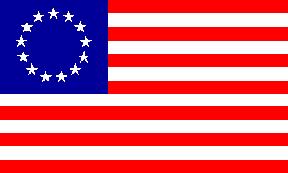
  • 1777 - The Flag of the United States flies in battle for the first time, at Cooch's Bridge in Maryland.


  • 1783 - The Revolutionary War between the United States and Great Britain ended with the Treaty of Paris.


  • 1950 - U.S. Military Assistance Advisory Group arrives in Saigon, Vietnam.


  • 2002 - U.S. Defense Secretary Donald Rumsfeld, an old friend of Saddam* cum leading proponent of the Iraq invasion, proclaimed that the White House believed Iraq was close to developing nuclear weapons.

    He subsequently stated, "Any country on the face of the earth with an active intelligence program knows that Iraq has weapons of mass destruction." - November 2002

    Rumsfeld even crowed that he knew where the WMD's were stashed -- a trifling detail he never revealed to weapons inspectors either before or after the invasion: "The area... that coalition forces control... happens not to be the area where weapons of mass destruction were dispersed. We know where they are. They're in the area around Tikrit and Baghdad and east, west, south and north somewhat." - March 2003
***


The leaders of the American Revolution witnessed the sacrifices made by their fellow countrymen to achieve independence from a foreign power. They understood the feelings of nationalism that emboldened Americans to seize the reins of their own destiny.

I wonder how those founding fathers, having won this country's independence through tremendous hardships, would react to our country's invasion and ongoing occupation of a sovereign country that posed no direct or immediate threat to our national security.

I wonder what price the people of Iraq are willing to pay for their independence - and how the continued dying of American troops in Iraq's internal struggle is good for Iraq or for the United States.

I wonder where George W. Bush finds the brass
to compare himself to George Washington. Perhaps it's time for "the decider" to stop casting himself as the great liberator of the 21st century, and to donate his histories of George Washington and his bust of Winston Churchill to the leaders of Iraq.

The people of Iraq will determine that country's future, just as the people of this country determined ours. That's the wisdom our forefathers demonstrated -- the lesson George W. Bush will never comprehend.


* See Revisiting Rumsfeld's Neville Chamberlain Moments, by Frank Rich.

April 25, 2006

Today is history's future


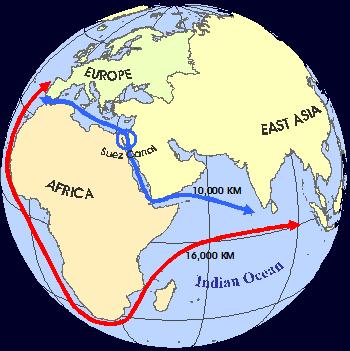
1859 - At Port Said, Egypt, ground is broken for the Suez Canal, stretching 101 miles between the Mediterranean and the Red seas. Ferdinand de Lesseps, the French diplomat who organized the colossal undertaking, delivered the pickax blow that inaugurated construction.

1867 - Tokyo was opened for foreign trade.

1945 - During World War II, U.S. and Soviet forces linked up on the Elbe River, a meeting that dramatized the collapse of Nazi Germany's defenses.

1945 - The United Nations is organized in San Francisco, California by 50 nations.

1953 - Dr. James D. Watson and Dr. Francis H.C. Crick suggested the double helix structure of DNA.

1967 - Colorado Governor John Love signed the first law legalizing abortion in the U.S. The law was limited to therapeutic abortions when agreed to, unanimously, by a panel of three physicians.

1974 - Coup in Portugal restores democracy (see Carnation Revolution).

1980 - In Iran, a commando mission to rescue hostages was aborted after mechanical problems disabled three of the eight helicopters involved. During the evacuation, a helicopter and a transport plan collided and exploded. Eight U.S. servicemen were killed. The mission was aimed at freeing American hostages that had been taken at the U.S. embassy in Tehran on November 4, 1979.

1992 - Islamic forces in Afghanistan took control of most of the capital of Kabul following the collapse of the Communist government.


Thought for Today

"A great many people think they are thinking when they are merely rearranging their prejudices."
- William James, American philosopher and psychologist (1842-1910)


April 24, 2006

Today is history's future


1184 BC - Greeks enter Troy using the Trojan Horse (traditional).

1814 - During the War of 1812, British troops burn Washington, DC. Fewer American soldiers were killed in battle between 1812-1815 than have been killed in Iraq, 2003-2006.

1846 - Mexican-American War begins. Known in Mexico as the United States Invasion of Mexico, the war grew out of a conflict with Texas, which had proclaimed its independence from Mexico in 1836 and was annexed by the US in 1845. Fewer American soldiers were killed in battle between 1846-1848 than have been killed in Iraq, 2003-2006.

1898 - Spanish-American War declared after Spain rejects the U. S. ultimatum to withdraw from Cuba. Fewer American soldiers were killed in battle between 1898-1902 than have been killed in Iraq, 2003-2006.

1906 - Pentacostalism, evidenced by speaking in tongues, falls from heaven April, 1906, on Azusa Street, Los Angeles. Today, Pentacostals are the world's fastest growing Christian group, with worldwide numbers second only to the Catholic Church. 14% of American Christians say they are Pentacostal; more than 33% say they are "spirit filled."

In John Kildahl's 1972 book, The Psychology of Speaking in Tongues, he observed that "glossolalists tend to have more need of authority figures and appeared to have had more crises in their lives."


Today's Quote

"Trojans, trust not the horse, whatever it be. I fear the Greeks, even bearing gifts."
-- Laocoon's warning to the Trojans, Virgil's Aeneid

April 23, 2006

Today in history

1564 - William Shakespeare, the great English dramatist and poet is born in Stratford-on-Avon.

1829 - William Burt patents the first typewriter, which he called the typographer.

1903 - Dr. Ernst Pfenning of Chicago, Illinois becomes the first owner of a Ford Model A.

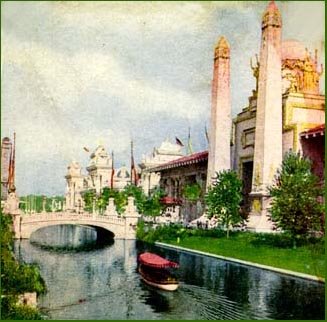
1904 - In St. Louis, Missouri, Charles E. Menches invents the ice cream cone during the Louisiana Purchase Exposition.

1981 - Artificial skin was first transplanted in the U.S. on patients at Massachussetts General Hospital, Boston. The combination of cowhide, shark cartilage and plastic was developed by Ioannis V. Yannas and a research team at MIT. This material makes possible the treatment of burn patients whose injuries might otherwise be fatal.


Today's Quotes

"O, how this spring of love resembleth
The uncertain glory of an April day;
Which now shows all the beauty of the sun,
And by and by a cloud takes all away."
- Shakespeare, The Two Gentlemen of Verona (I, iii, 84-87)

"All the world's a stage,
And all the men and women merely players.
They have their exits and their entrances,
And one man in his time plays many parts,
His acts being seven ages."
- Shakespeare, As You Like It (II, vii, 139-143)

"The quality of mercy is not strain'd.
It droppeth as the gentle rain from heaven
Upon the place beneath.
It is twice blest:
It blesseth him that gives and him that takes."
- Shakespeare, Merchant of Venice (IV, I, (184-186)

April 22, 2006

Today in history - Oklahoma!


1864 - The United States Congress, under leadership of radical Republicans, passes the Coinage Act of 1864 which mandates that the inscription "In God We Trust" be placed on all coins minted as United States currency.

After all, "god-fearing patriots" were at war against the "rebel hordes" of the South, "who do not know what it is to be an American," and must therefore suffer "the next thing to annihilation." (Maj. George W. Nichols, staff officer of Gen. Sherman)

God's name was freely invoked on both sides of the senseless slaughter, even as young men from the North were being drafted to invade the Southern states and "annihilate" their Southern brothers -- in the name of God and country:

"There is a class of people at the South who must be exterminated before there can be peace in the land.... In the record of great wars we read of vast armies marching through an enemy's country, carrying death and destruction in their path; of villages burned, cities pillaged, a tribe or a nation swept out of existence.... History, however, will be searched in vain for a parallel to the scathing and destructive effect of the Invasion of the Carolinas." (Gen. William T. Sherman, describing the historical "shock and awe" campaign directed by "Honest Abe.")

The same "Grand Ole Party" that supported the annihilation of their own countrymen in the 1860's -- God was on their side, so the ends justified the means -- has not changed much. How many times in recent days have we heard Bush apologists like John McCain, among others, compare George W. Bush to Abraham Lincoln? And why not?

Republicans learned the lesson well: When the history books are written, winning -- whatever it takes -- is all that matters.


1889 - Oklahoma land rush: President Benjamin Harrison opens Oklahoma to white settlement.

1915 - German forces shock Allied soldiers along the western front by firing more than 150 tons of lethal chlorine gas against two French colonial divisions at Ypres, Belgium. This was the first major gas attack by the Germans, and it devastated the Allied line.

1934 - John Dillinger's gang shoots their way out of an FBI ambush outside the Little Bohemia Hunting Lodge in northern Wisconsin. The FBI accidentally kills one innocent bystander and injures two others in the humiliating debacle.

1970 - Millions of Americans concerned about the environment observed the first Earth Day.


Photos: Some of my family who were early settlers to
Oklahoma Territory


_____

With apologies to my Oklahoma cousins and blondes everywhere:

Two blondes living in Oklahoma were sitting on the porch swing, looking at a full moon and thinking of their Florida cousins. One blonde says to the other, "Which do you think is farther away......... Florida or the moon?"

The other blonde turns and says, "Helloooooooo, can you see Florida???"

April 21, 2006

Today in history

753 B.C. - According to tradition, Romulus and his twin brother, Remus, founded Rome on the site where they were suckled by a she-wolf as orphaned infants.

1836 - The Battle of San Jacinto,was the decisive battle of the Texas Revolution. Led by General Sam Houston, the Texas Army engaged and defeated General Antonio Lopez de Santa Anna's Mexican forces.


A family ancestor
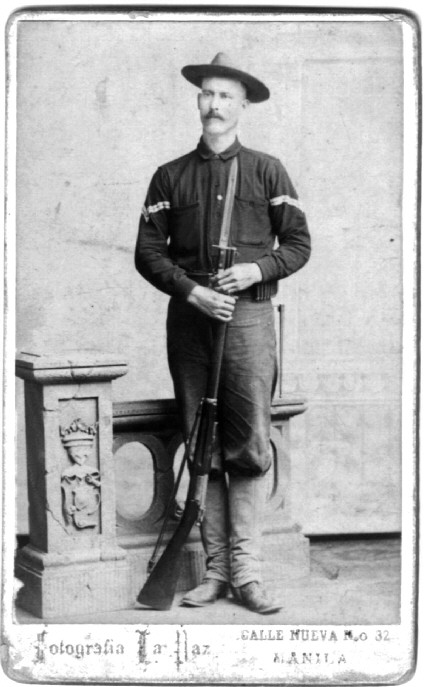
Spanish-American War

1898 - Spanish-American War: The United States Congress, on April 25, recognized that a state of war had existed between the United States and Spain as of this date. War results: The United States gained control over the former colonies of Spain in the Caribbean and Pacific. The US lost 379 troops in combat and over 5,000 to disease. As a result of the war, Cuba would be declared independent in 1902.

1933 - Nazi Germany outlaws shechita, the Jewish butchering ritual for kosher meat preparation. Things only get worse from here.


1953 - Roy Cohn and G. David Schine, two of Senator Joseph McCarthy's chief aides, recommend the removal of 30,000 books from the libraries of the United States Information Service posts in Europe, including works by Dashiell Hammett, W. E. B. Du Bois, Herman Melville, John Steinbeck and Henry David Thoreau, calling them "pro-Communist".

1976 - Full-scale testing of the swine flu vaccine began in Washington, D.C.


Thought for Today
"Why is it that we rejoice at a birth and grieve at a funeral? It is because we are not the person involved." -- Mark Twain (Nov. 30, 1835 - April 21, 1910).

April 20, 2006

Today in history

Ceremonial "smoke out" day.

1233 - Pope Gregory IX places the Inquisition, in existence since 1227, under the aegis of the Dominican Order. Torture is apparently sometimes necessary to save souls,
and the office continues to exist today as the Congregation for the Doctrine of the Faith.

1657 - Jews of New Amsterdam (later New York City) granted freedom of religion.

1775 - American Revolutionary War: British troops begin siege of Boston, Massachusetts.

1889 - In Braunau, Austria, Klara Hitler gives birth to a bouncing baby boy named Adolf.

1914 - The Ludlow Massacre was one of the bloodiest assaults on organized labor in American history. It was the climax of an effort to suppress a strike by Colorado coal miners of the United Mine Workers of America (UMWA) union.

1999 - Columbine High School massacre: Eric Harris and Dylan Klebold open fire in their high school leaving 15 dead and 23 wounded.

April 12, 2006

Today in history

"A country without a memory is a country of madmen." - George Santayana


April 12, 1861 - The American War Between the States began after Confederate forces fired on union troops at Ft. Sumpter, Charleston harbor, SC, in response to provocation by military forces commanded by President Abraham Lincoln.

The new president's strategy, both before and after the incident, had excluded the possibility of real compromise and a peaceful resolution preferred by Democrats. It was designed instead to appease radical Republicans, to help them win the Congressional elections of 1862, and to provoke what some had assumed would be a quick and easy war to subjugate the South.


Union forces at Ft. Sumpter surrendered after 36 hours, and no one was killed during the attack. Few in the country wanted war -- especially people of the agricultural South, which had little industry for waging war -- but Ft. Sumpter had given Lincoln his "9/11"-style justification to retain power by uniting his base in the populous North against a perceived enemy.

Ultimately, more than 560,000 people died between 1861-1865 -- two percent of the country's population. (In comparison, 2% of today's population is six million.) Almost twice as many died from disease and other causes as died in battle.


Then, as now, war was orchestrated for political reasons, with the most extreme elements of both North and South playing "crass politics." Historical explanations for the greatest tragedy in American history -- "to save the union" -- are as simplistically misleading as today's explanation for the invasion of Iraq "to fight terrorism."


April 12, 1975 - Vietnam War: The United States embassy in Phnom Penh, Cambodia was evacuated as Khmer Rouge troops encircled the city.

White House tapes prove that President Nixon had acknowledged, even before the 1972 election, that the U. S. could not win in Vietnam, but he prolonged the war for political reasons -- his own "peace with honor" reelection campaign. Because of his decision, thousands of soldiers and civilians died unnecessarily.

Yet the hawks of the Vietnam era -- most of whom found ways to avoid military service in Vietnam, and who never blamed Nixon for his lies and mistakes -- have become today's neocons, led by George W. Bush, Dick Cheney, and Karl Rove.


April 12, 2006 - American troops are dying in Iraq. The neocons who sent them there are contemplating a war on Iran, further igniting the Middle East.

_____

So much for the argument that "no president would ever send our young soldiers and sailors to their deaths if war could be avoided."

We know what the history books say about the decades of 1860-1870 and 1965-1975. What will they say about 2001-2010?