Showing posts with label Environment. Show all posts

October 27, 2007

'Gov. Climate' finds the water fine


Florida Gov. Charlie Crist sees the value in $3500 solar panels for the governor's mansion -- but approves a cut of millions of dollars in water projects from the state budget.

TALLAHASSEE--Gov. Charlie Crist on Friday endorsed a 5 percent tuition hike for universities and community colleges and rejected a plea to veto a plan to cut $20 million in water projects from the state budget. ....

On the water projects, some lawmakers, including Sen. Paula Dockery, R-Lakeland, had urged Crist to veto a bill (SB-24C) that cut $20 million in water projects from the state budget.

With the state facing another water crisis, Dockery said it was the wrong time to make the cuts, which she said would amount to a continuing $30 million annual cut in future years if it was not restored. - Crist endorses 5% boost in tuition
Related . . .

October 19, 2007

Florida legislature throws out the bath water


Legislative chambers in dire need of a cleansing

Only in the chambers of the Legislature, with a drought engulfing much of Florida and amid a brewing statewide water war, would it make perfect sense to cut funding designed to clean and enhance the public water supply.

During their recent special session to shave $1.1 billion from the state budget, lawmakers voted overwhelmingly to slash $20 million from the state's $100 million Water Protection and Sustainability Trust Fund, which banks tax revenue from real estate transactions to fund projects to develop alternative water sources and improve water quality.

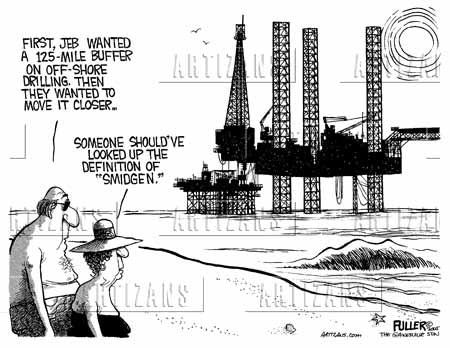
It's not surprising that a trust fund was hacked up in this manner. Trust fund raiding was elevated to an art under former Gov. Jeb Bush.


Photo: FloridaDisaster.org

Sen. Paula Dockery, R-Lakeland, sent a letter urging Gov. Charlie Crist to veto SB 24-C to preserve this funding. She was joined on Tuesday by House Democratic Minority Leader Dan Gelber of Miami Beach.

It's unbelievable that water-supply projects, arguably the most critical issue facing our state, warrant a 20 percent reduction in funding, when lawmakers met to shave a total of just 2 percent from the state budget.

[Sen. Dockery's] fellow legislators - and the governor - should do some soul searching. If they don't understand the importance of water to Florida, they understand nothing about our state.

  • Ledger editorial, Oct. 19: Lawmakers drain water money

  • Related articles. . .

    February 25, 2007

    Loxahatchee: Florida's 'river of turtles'


    Significance: The Loxahatchee River is the only blackwater stream in south Florida. It has diverse fish and plant species containing a mix of temperate and subtropical species. Florida's first river to be designated a federal wild and scenic river.

    Meaning: River of Turtles in Seminole language.

    Location: Northern Palm Beach and southern Martin counties, north of Jupiter.

    View special Lakeland Ledger report, including multimedia and photo gallery:


    December 22, 2006

    Bee losses threaten food supply


    Bee colonies in Florida, Pennsylvania, Georgia, North Carolina and elsewhere are being decimated at an alarming rate, and the cause is unknown.

    The phenomenon, termed "Fall Dwindle Disease," is discussed in a preliminary report published last week by researchers in Pennsylvania and Florida.

    In addition to honey producers, fall dwindle poses a serious threat to a $15 billion pollination industry that supports the nation's fruit, nut and vegetable crops each year.

    Without honeybee pollination, the food supply could decrease by a third, according to the Florida Department of Agriculture, causing significant harm to citrus and blueberry production and virtually eliminating watermelons, cucumbers and squash.

    Although bee experts have identified several possible culprits, a prevailing theory has yet to emerge on the source of fall dwindle.
    Lakeland Ledger report: Bee losses puzzle experts


    December 09, 2006

    You may qualify for energy incentives


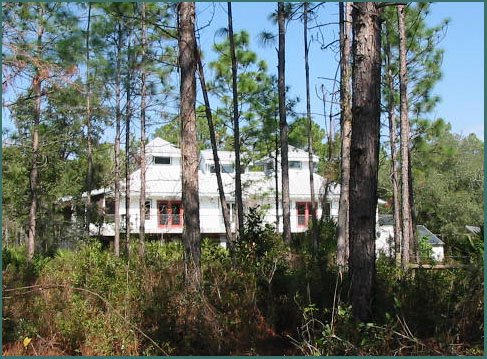
    My house roof

    DSIRE is a comprehensive source of information on state, local, utility, and federal incentives that promote renewable energy and energy efficiency.

    Click on your state to search the database.

    See BusinessWeek Online for a slide show and reports on green technologies:

    Bore a hole into the ground to draw the earth's warmth to heat and cool your home. Or why not put up a wind turbine or install solar panels to heat the water in your shower? Here are some green technologies being used in American and British houses that both draw on designs from the past and offer a glimpse of the future of home energy.

    July 16, 2006

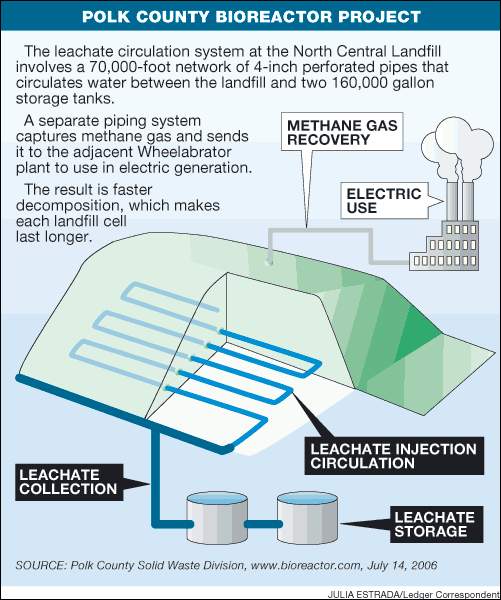
    Landfill technology: Bioreactor treatment is efficient and cost-effective

    Just add water. That simple concept, coupled with a complex, computer-driven implementation plan is putting Polk County's North Central Landfill on the technical frontier of garbage disposal.

    Click to enlarge illustration

    Tom Palmer, 'Bioreactor' Landfill Saves Space, Keeps Polk Disposal Fees Low

    March 02, 2006

    The Florida Solar Cracker House


    I stumbled onto a web site describing "an energy efficient, solar-powered home" in Central Florida.
    Interlachen is located southwest of St. Augustine, east of Gainesville and north of the Ocala National Forest.

    According to Liz, who published the online document, she and her husband Randy have been living in the house since mid-1998. She describes their successes and failures:

    "Our original plan was to use no fossil fuels at all. We have relaxed that ideal a bit, and now have some propane appliances as convenience and backup systems. Our total use of propane is about 30-35 gallons per year, for which we pay about $75, including delivery. We also have a backup Honda gas generator, which we rarely use."
    If you're interested in this sort of thing, check out the site with its loads of useful information and photos. . . .
    See also. . . .

    November 01, 2005

    Avon Park bombing likely to go up


    The November 1, 2005
    By Tom Palmer, The Lakeland Ledger

    The Navy's plan may pose a threat to several species, including the protected Florida scrub-jay. Increased bombing is scheduled to begin next spring.

    The fighter-bombers would drop more than 13,000 practice bombs, up from nearly 8,400, and more than 1,500 high explosive bombs. Military aircraft would fire as many as 27 Hellfire missles at targets on the ground and helicopter flights would increase from nearly 1,100 to more than 1,400. The Navy considered six plans, and while the chosen one is not the least disruptive of the alternatives, it is close to it.

    In addition to scrub-jays, the bombing is likely to affect Eastern indigo snakes adversely, as well as pigeonwing and jointweed, two rare plant species found primarily on Central Florida's sand ridges.
    More on this story and related articles:


    October 26, 2005

    Offshore gulf drilling debate redux

    On Wednesday (today), the House Resources Committee is scheduled to consider a deal that would open vast areas of the eastern Gulf of Mexico to oil and gas exploration in return for other protections.
    The deal is the product of months of negotiations among House Resources Committee Chairman Richard Pombo, R-Calif., Gov. Jeb Bush and several Florida members of the U.S. House, but how much support it ultimately would have remains uncertain. Offshore gulf drilling debate redux
    Florida politicians for years have fought offshore drilling to protect estuaries and beaches critical to the state's ecology and tourism industry from pollution and spills.

    Both of Florida's U.S. senators, Republican Mel Martinez and Democrat Bill Nelson, and the state's House Democrats are opposed to the Pombo plan, preferring to seek renewal of the more restrictive moratoriums. The state's Republican House members have been split.

    "We all understand that America must find new sources of energy, but drilling off Florida's sensitive coast won't solve the nation's current energy challenges," U.S. Rep. Connie Mack IV, R-Fort Myers, said in a statement opposing the Pombo legislation. Jeb! supports new bill to drill
    In a letter published today in the Lakeland Ledger, Senator Bill Nelson stated:
    There is relatively little oil in the eastern gulf. Drilling will make no difference in prices or foreign oil dependency. I believe there are ways of solving these problems without placing our economy and environment in danger.

    Raising the required fuel efficiency standards for cars by nine miles per gallon would save the United States about a fourth of all the oil we import -- significantly decreasing our dependency. Practical alternative-fuel technology exists as well. Ethanol, nuclear power plants, and gas made from coal offer attractive alternatives to drilling.

    Consider that the United States has only about 3 percent of all the world's oil reserves, meaning there's no way to drill our way out of this crisis. Instead, we must conserve energy and develop alternative fuels -- while continuing to protect Florida's strong economy, unique environmental resources and unmatched military-training sites by stopping proposals to expand drilling in the eastern Gulf of Mexico. Lakeland Ledger

    September 28, 2005

    Florida offshore drilling plan has Congressional support


    Goodbye, Florida beaches, some of the world's most beautiful. Once the beaches and offshore waters are polluted, a possible consequence of gulf drilling, the Florida we love could cease to exist.

    We all hope the worst case scenario never happens, but many members of the US Congress -- including several of Florida's own representatives -- are banking on hope while rolling the dice on the state's future.

    Here's a photo of Caladesi Island, but this scene represents much of Florida's gulf coast.

    Now imagine this scene following a major oil spill in gulf waters 25 miles from shore.

    Just as 9/11 opened the doorway to Bush's domestic and foreign agenda, Katrina and Rita have blown open the door to another opportunity -- more drilling in gulf waters off Florida's coast.

    In their push to move drilling even closer to the Florida coast, what can the Bush administration and Congressional Republicans be thinking? (Hint: the answer is in the question.) They are Republicans. All that matters is maintaining party unity and enriching their corporate sponsors.

    A proposed energy measure would give Florida and other coastal states control over oil and gas drilling rights 125 miles from shore but would end state authority beyond that point.

    Dan McLaughlin, spokesman for Sen. Bill Nelson, D-Fla., said the bill may seem to give control over a buffer zone but is actually full of loopholes that could be used to allow drilling as close as 25 miles from shore.

    "This is basically marching forward with an agenda to hand over to the oil companies the Gulf of Mexico," McLaughlin said, "and they're doing it under cover of hurricanes."

    An aide to the House Resources Committee named seven likely Republican supporters of the bill from Florida, but three others may also favor the idea. In the past, Florida lawmakers have nearly unanimously opposed any drilling east of the Alabama state line, so this legislation could be a breakthrough for drilling supporters.

    The committee counts as likely supporters Reps. C.W. Bill Young of Indian Shores, Ginny Brown-Waite of Crystal River, Adam Putnam of Bartow, Clay Shaw of Fort Lauderdale and Lincoln Diaz-Balart of Miami, all of whom have said they might be able to support a compromise along these lines. Rep. John Mica of Winter Park also has been sympathetic to the negotiations.
    Read the article here: Offshore drilling plan has support
    Also, Ban on coastal drilling losing backers

    If you want to help, please write or call your US representatives and senators
    and/or members of the House Resources Committee.

    September 20, 2005

    Katrina's next disaster


    These are quotes quotes from a Lakeland Ledger editorial:

    Most of the heavily polluted water from New Orleans and other storm-damaged areas will eventually find its way into the Gulf of Mexico. That water is heavily laden with all manner of heavy metals, chemical and petroleum spills, human waste and much more.

    "Whatever goes into the northern Gulf ends up being carried by the Gulf Loop Current, which goes clockwise, spreading whatever is in those waters along the Gulf Coast of Florida," said Bill Byle, an environmental official with Charlotte County, to the Charlotte Sun Herald.

    "Many chemicals, especially petroleums and persistent pesticides, remain `active' for many years. . . . If they end up on the beaches, marshes and bottoms of our estuaries, they could have serious, long-term impacts throughout the marine and estuarine food chains."

    And while the Federal Emergency Management Agency has gotten its share of criticism for being slow to react to the immediate damage caused by Katrina, another federal agency, the Environmental Protection Agency, seems barely on the radar screen as the toxic effects of Katrina's floodwaters begin to be felt.

    Indeed, the EPA wasn't even on the initial list of federal agencies assigned immediate response duties in the wake of Katrina. And although the EPA has since begun to test samples of polluted water in New Orleans and elsewhere, the agency is refusing to release the results of those tests.

    Compounding all of this is the fact that adequate funding may not be available to begin cleaning up toxic waste sites created or made worse by Katrina. That's because a tax on chemical and oil industries that once provided funding for the Superfund program has been allowed to expire. Superfund is, these days, funded largely by tax dollars, and appropriations have been declining in real dollars since 1993.

    It is foolish to believe that this disaster will end when New Orleans has been pumped dry and the task of rebuilding is well under way. "The initial damage caused by Hurricane Katrina is already done, and it's staggering," warns the National Environmental Trust. "The long-term effects of our nation's largest environmental disaster, however, will be determined by the clean-up and re-entry choices we make in the weeks and months ahead."

    If the EPA fails to provide leadership and a plan of action to address Katrina's "toxic gumbo," the failures of FEMA may one day look like a minor dereliction of duty by comparison.


    And if that's not scary enough... see these articles:

    St Pete Times - "Lawmakers are still plotting to put oil rigs in Florida's side of the gulf, where damage from hurricanes could threaten the state's environment and economy."

    Ft Lauderdale Sun-Sentinel - "Florida could bow to drilling: Fears of rising U.S. energy prices might break leaders' united front on the Gulf."

    When Congress begins work next month on a large tax and budget bill, it might include a provision allowing drilling in part of the eastern Gulf.

    Instead of being blocked by Florida lawmakers, as efforts have been for years, the proposal may well be drafted by three of them: Rep. Cliff Stearns, R-Ocala; Rep. Michael Bilirakis, R-Tarpon Springs; and Rep. Jeff Miller, R-Chumuckla.And many of their GOP colleagues say they are willing to consider the idea.

    September 19, 2005

    Stop the attack on the Endangered Species Act

    Ask Your Legislator in Congress to Oppose Pombo Extinction Bill


    Representative Richard Pombo (R-CA) has stated that this week he will introduce a bill that would greatly rewrite the Endangered Species Act. Representative Pombo has long carried the message of developers and is Congress' loudest opponent of endangered species protections. He is also chair of the House Resources Committee.

    A hearing on the bill is scheduled for Wednesday, September 21, and a committee vote on Thursday, September 22. Please act now!

    The Endangered Species Act is the most important federal wildlife law that protects manatees and other endangered and threatened species of animals and plants. Rep. Pombo has not yet released the full legislative language, but according to the summary, the bill would:

    * completely repeal protections for endangered species' critical habitat.
    * remove protections for species listed as "threatened" under the law.
    * allow political appointees -- such as Secretary of the Interior Gale Norton -- instead of scientists to determine what constitutes the best available science.
    * exempt federal agencies from the requirement to consult with the U.S. Fish and Wildlife Service on actions that might impact endangered species.
    * bankrupt the endangered species program by forcing the Fish and Wildlife Service to pay developers to comply with the law.
    What You Can Do: Please go to Save the Manatee to see how you can make a difference.

    September 06, 2005

    Lakeland Ledger Editorial: Wetlands Matter in Florida, Too

    You can call what happened to New Orleans devastating, unprecedented, calamitous and profoundly disturbing. What you cannot call it is unpredictable.

    Neither, strictly speaking, can you call what happened to that "city in a bowl" a "natural disaster." While it's true that Katrina was a monstrous hurricane, the damage she wrought was equally "man-made."

    Message from Katrina to America. Wetlands matter.

    .... Florida, surrounded on three sides by the sea and situated in the middle of "hurricane alley," is just as exposed. Florida has lost millions of acres of wetlands to bad development and ill-advised engineering schemes. Past attempts to "tame" the Everglades, and make coastal Florida more hospitable to high-rises and condos have resulted in widespread destruction of once-productive, and protective, marshes, wet prairies, swamps and barrier islands.

    .... Since 1990, the U.S. Army Corps of Engineers has approved more than 12,000 permits to destroy 84,000 acres of Florida wetlands.

    During that time span, the Corps rejected just one permit.

    Nonetheless, developers complain that the Corps doesn't approve their permits quickly enough. So this year, Gov. Jeb Bush signed a new law making it easier for developers to bypass the Corps and get state approval to destroy wetlands of 10 acres or less.

    "Elimination of unnecessary, duplicative and over-burdensome regulations is an excellent goal," Bush said upon signing the bill.

    .... Katrina has demonstrated the sheer insanity of destroying wetlands in the name of eliminating "unnecessary, duplicative and over-burdensome regulations."

    We hope and pray that no Florida city will ever suffer the fate of New Orleans. But if none does, it will be due to sheer, dumb luck; and certainly not because Florida avoided Louisiana's mistakes and zealously protected its natural system of storm-suppressing wetlands.
    Full editorial at Lakeland Ledger